Why Norweco Singulair Green Is a Practical Choice in Wantage NJ
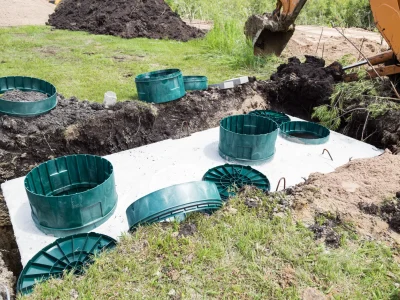
If you spend enough time around rural and semi-rural properties in northern New Jersey, you learn quickly that wastewater systems are not a side issue. They shape building plans, renovation budgets, resale decisions, and even how comfortably a household can grow over time. In places like Wantage, where many homes depend on onsite treatment rather than centralized sewer service, the right system has to do more than satisfy a permit. It has to perform year after year in real weather, on real lots, under real household use.
That is where the Norweco Singulair Green often enters the conversation.
People usually do not start out excited about wastewater treatment. They start with a problem. A failing septic system. A difficult lot. A home addition that increases bedroom count. A property purchase that looks perfect until the septic inspection raises concerns. Sometimes the issue is age. Sometimes it is soil conditions. Sometimes the existing setup was acceptable decades ago but no longer fits current expectations or local requirements. A treatment system that can handle those constraints without becoming a constant maintenance headache has obvious appeal.
For homeowners evaluating norweco singulair green Wantage NJ options, the practical value comes down to a few simple questions. Does it treat wastewater effectively? Can it work on properties where a basic conventional approach may struggle? Is it serviceable? And will it make sense over the long term, not just on installation day?
Why practicality matters more than brand familiarity
A lot of property owners hear about wastewater products through contractors, neighbors, or online research. norweco singulair green Wantage NJ Brand recognition can help, but it can also distract from the real issue. The better question is not whether a system is well known. The better question is whether it fits the site, the usage pattern, and the owner’s tolerance for maintenance and operating cost.
That distinction matters in Wantage. Conditions in this part of Sussex County can create challenges that are easy to underestimate if you have only dealt with a simple gravity septic system on an ideal lot. Terrain varies. Some properties have room to spread out, while others are tighter than they first appear once setbacks, wells, driveways, and drainage patterns are considered. Seasonal water conditions can change how a field performs. Older houses may be standing on infrastructure that was designed for a very different level of occupancy.
An advanced treatment unit such as the Norweco Singulair Green is practical because it addresses the treatment side of the equation more aggressively than a conventional septic tank alone. Instead of relying mainly on settling and then pushing partially treated effluent into the disposal field, this type of system is built to provide a higher level of treatment before the water reaches the soil dispersal area. In plain terms, cleaner effluent can give a designer more flexibility and may reduce stress on the downstream part of the system when properly matched to the site.
That does not mean it is a cure-all. No treatment unit can overcome bad design, poor installation, lack of maintenance, or a gross mismatch between household use and system capacity. But when a property needs a more robust treatment approach, that extra level of processing is often the difference between a workable plan and a long permitting fight.
What the Norweco Singulair Green is, in practical terms
Homeowners often get buried in technical language, and much of it is not useful during early decision-making. At a practical level, the Norweco Singulair Green is an aerobic treatment system. That means it uses oxygen and biological treatment processes to break down wastewater more thoroughly than a basic septic tank setup typically does on its own.
If you have ever compared a neglected pond to a well-aerated body of water, you already understand the general principle. Oxygen changes how biological treatment happens. In wastewater systems, that can translate to cleaner effluent, reduced organic loading to the disposal area, and a treatment process that is more active rather than passive.
The system is not just a tank with a blower attached. It is a purpose-built treatment unit with components that need proper sizing, installation, and ongoing service. That last point is important. Some buyers hear “advanced treatment” and assume “complicated.” Sometimes that concern is fair. But there is a difference between equipment that is fussy and equipment that is structured. In my experience, structured systems are often easier to manage over the long run because expectations are clear. They require service, they have operating parameters, and they are not pretending to be maintenance-free.
That honesty is part of why these systems make sense for certain properties. A conventional septic system can appear simpler, but if the site is marginal and the field is overloaded, “simple” can become very expensive very fast.
Why this fits the realities of Wantage NJ
Wantage is not the kind of place where every lot behaves the same way. That matters because wastewater design is intensely site-specific. You can drive ten minutes and see meaningful changes in layout, slope, available open area, and age of housing stock. A system that works beautifully on one parcel might be the wrong answer for the next.
The Norweco Singulair Green is practical in this setting because it gives designers and property owners another tool when conventional options become restrictive. For example, when a house lot has limited usable area for disposal, improved pretreatment can be a major advantage. When an owner is replacing an aging system at an older home, a modern treatment unit can make compliance and redesign more achievable. When a buyer wants to improve a property without overbuilding the site, the treatment performance can open up possibilities that a bare-bones approach would not.
This is especially relevant for people buying or upgrading long-held family homes. A pattern I have seen many times is this: the house itself is sound, the location is great, and the owner wants to renovate the kitchen, add a bath, or finish space for regular guests. Then the septic evaluation reveals that the existing system was never really designed for present-day use. At that point, owners are faced with a choice between doing the minimum and hoping for the best, or investing in a system that aligns with how the house will actually be used.
The Norweco route tends to appeal to people in the second group. They are not looking for the cheapest line item. They are looking for a system with a defensible rationale.
Cleaner effluent is not an abstract benefit
One phrase you hear often in the wastewater world is “better treatment quality.” For homeowners, that can sound vague. The real-world meaning is more direct. Cleaner effluent can help protect the disposal field, support compliance with local requirements, and reduce the environmental burden of wastewater leaving the tank.
That matters on a practical level because the drainfield or dispersal area is usually where the biggest repair costs live. When that portion of the system starts to fail, the problem is rarely small. Excavation, redesign, replacement area constraints, and permit issues can all pile up fast. Anything that reduces stress on that part of the system deserves serious attention.
Think of it like air filtration in a mechanical system. If the upstream process removes more of the burden before it reaches the downstream component, the downstream component often has a better chance of lasting and performing as intended. It is not a perfect analogy, but it captures the logic.
For a homeowner in Wantage, the environmental side also matters, even if the motivation starts with property value rather than ecology. Onsite wastewater systems sit close to wells, neighboring properties, and natural drainage patterns. A system that treats wastewater more thoroughly before dispersal is not just a technical upgrade. It is a practical form of risk reduction.
The maintenance question, honestly answered
Every serious conversation about advanced treatment systems needs to address maintenance without sugarcoating it. The Norweco Singulair Green is not install-and-forget infrastructure. It needs periodic inspection and service. Mechanical components have to be checked. Sludge levels still matter. Alarms and controls need attention when something is off.
That said, “requires maintenance” is not the same as “problematic.” Cars require maintenance. Heating systems require maintenance. Wells and water treatment equipment require maintenance. What matters is whether that maintenance is predictable, whether service providers are familiar with the equipment, and whether neglect is likely to create sudden, ugly failures.
In many cases, owners do better with a system that has defined service intervals than with one that lulls them into complete inattention. Traditional septic systems are often ignored until sewage backs up or the yard turns soft and wet. By then, the repair bill tends to be much larger than anyone hoped.
With a Norweco unit, the expectations are more explicit. There is equipment. It should be inspected. Service records matter. If you are the kind of owner who responds well to a maintenance schedule, that is not a disadvantage. It is one of the reasons the system can remain dependable.
A realistic owner should also account for operating costs. There is power use. There is professional service. There may be periodic component replacement over the life of the system. None of that should be treated as a surprise. But compared with the cost and disruption of rehabilitating a failed field or trying to force a conventional system onto a constrained lot, those recurring costs can be entirely reasonable.
Where the system tends to make the most sense
Not every property needs an advanced treatment unit. There are homes on excellent sites with adequate area, favorable soil conditions, and a conventional design that is still the cleanest answer. Good judgment means admitting that. The practical case for the Norweco Singulair Green gets strongest when the property is asking more from the treatment system than a standard setup comfortably provides.
A good fit often looks like this:
- an older home where the existing septic arrangement is outdated, undersized, or failing
- a lot with physical constraints that make standard field design more difficult
- a renovation or addition that increases wastewater demand
- an owner who values monitored performance over a bare-minimum approach
Those are not fringe scenarios in Wantage. They are common enough that many local property owners eventually face one of them.
Installation quality matters as much as product choice
One of the easiest mistakes in this category is assuming that picking a respected system automatically guarantees a good result. It does not. The installer, designer, and service network matter enormously.
A properly selected Norweco Singulair Green system should be matched to actual household use, local code requirements, and the site layout. Tank placement, piping, electrical work, venting, alarm setup, and discharge design all need attention. The treatment unit is only one piece of the total wastewater strategy. If the dispersal component is poorly planned, or if the site work is sloppy, even a solid treatment unit can end up carrying blame for problems it did not create.
This is where local experience pays off. Contractors and designers who regularly work in Sussex County tend to understand the permit process, common site constraints, and seasonal considerations better than someone applying a generic plan from a different region. They know where homeowners often get surprised, and they know which details are likely to matter later during inspection, service, or resale.
I have seen projects where owners saved a few thousand dollars upfront by treating septic work as a commodity purchase, only to spend far more correcting avoidable installation issues later. With advanced treatment systems, that risk is even less worth taking. A thoughtful install is not a luxury. It is part of the product’s value.
The resale and renovation angle
Homeowners do not always think about septic investments in terms of resale, but buyers absolutely do. In many transactions, wastewater questions move from background concern to front-and-center issue the moment an inspection report arrives. A property with a failing or questionable system can lose momentum fast. Repairs become bargaining chips. Timelines get delayed. Deals unravel.
A documented, properly maintained advanced treatment system can shift that conversation in a better direction. It shows that the owner addressed wastewater infrastructure intentionally rather than reactively. Buyers may still ask questions, as they should, but there is a meaningful difference between “the septic is old and we hope it keeps working” and “the property has a modern treatment system with service history.”
This also matters for owners planning additions or significant interior updates. There is little pleasure in spending heavily on finishes, cabinetry, flooring, or exterior improvements while ignoring the system that determines whether the house can legally and functionally support the way it is being used. In a practical budget hierarchy, wastewater infrastructure is rarely glamorous, but it is often foundational.
Trade-offs that deserve honest attention
No responsible article on the topic should present the Norweco Singulair Green as the automatic best answer for every home in Wantage NJ. It is a practical choice in the right conditions, not a universal prescription.
The first trade-off is cost. Upfront installation cost can be higher than a simpler conventional arrangement, particularly where a conventional system is still viable without major design gymnastics. If the site genuinely supports a standard approach with ample room and straightforward compliance, the financial argument for an advanced treatment system may be weaker.
The second trade-off is dependence on ongoing service. Some owners dislike any system with mechanical and electrical components because they view it as one more thing to monitor. That preference is understandable. If an owner is highly unlikely to keep up with service, a more advanced unit may not be the wisest fit, even if it is technically attractive.
The third trade-off is that performance depends on proper use. Like any treatment system, it can be undermined by abuse. Excessive grease, wipes, harsh chemicals, or unmanaged hydraulic surges can create problems. The same is true of many septic systems, but owners sometimes forget that improved treatment does not exempt them from good habits.
Those trade-offs are not deal-breakers. They are part of an adult conversation about ownership.
Questions worth asking before you commit
If you are seriously considering a system like this, the most useful conversations happen before equipment is ordered. Ask direct questions and expect direct answers.
- How does this system fit my lot conditions and permit requirements?
- What service schedule should I expect, and who will perform it?
- What are the realistic annual operating and maintenance costs?
- How will this design support future household use or planned additions?
- What documentation should I keep for inspections, service, and resale?
A strong contractor or designer should be comfortable answering these clearly. If the discussion stays vague, that is a warning sign.
Why homeowners often end up glad they chose the stronger option
There is a pattern that shows up across home infrastructure decisions. The owner who buys the minimum Excavating New Jersey LLC norweco singulair green Wantage NJ acceptable system often feels satisfied for about six months. Then real use begins. Weather changes. Guests visit. Laundry piles up. A small warning sign gets ignored. A wet season exposes a weakness. Suddenly the difference between “just enough” and “properly designed” becomes painfully obvious.
With wastewater systems, the cost of being underbuilt is usually hidden until it is not. That is part of what makes the Norweco Singulair Green a practical choice in Wantage NJ. It is not about buying complexity for its own sake. It is about recognizing when a property benefits from more treatment capability, more design flexibility, and a more deliberate maintenance framework.
For the right home, that can mean fewer compromises during design, better support for renovations, improved confidence during resale, and less strain on the disposal side of the system. Those are tangible benefits, not marketing language.
When owners approach the decision with clear eyes, the appeal becomes obvious. They are not shopping for a tank. They are investing in a wastewater strategy that fits the realities of the property. In that context, the Norweco Singulair Green earns its reputation the old-fashioned way, by solving real problems in a way that holds up over time.
Excavating New Jersey LLC
406 County Rd 565
Wantage, NJ 07461, United States
Phone: +1 (973) 791-4284
FAQ About norweco singulair green Wantage NJ
How does a Norweco septic system work?
Singulair Green uses aerobic biological treatment in a polyethylene tank, followed by settling and filtration. The treatment unit is one part of a complete wastewater system; the site design also determines how treated effluent is dispersed.
How much does a Norweco septic system cost in NJ?
A useful estimate requires a property evaluation. Excavation access, soil conditions, engineering, electrical work, the disposal field, and restoration can affect the total. Ask Excavating New Jersey LLC for a written scope that distinguishes installation costs from ongoing service costs.
Are Norweco septic systems good?
Singulair Green is an established aerobic treatment option, but suitability depends on the property and proposed design. Compare the model's documented performance, maintenance needs, and total project scope with alternatives before deciding.